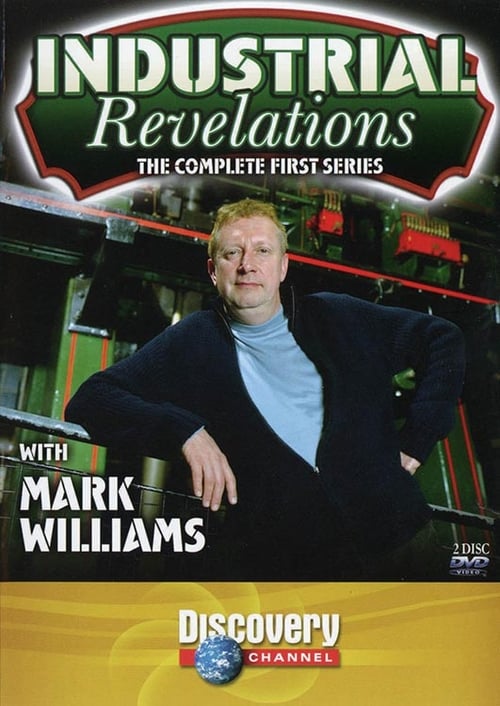
Seasons & Episodes
Boom Time
The introduction of Britain's canal system. Plus, how coal transportation was crucial to the Industrial Revolution.
Pants for All
Mark Williams discovers how comfortable cotton fabrics became available to everyone with the introduction of water-power
Clocking On
Mark Williams discovers how engineer James Brindley tunnelled through hills in a straight line, and details the emergenc
Pennine Passage
How the Leeds and Liverpool Canal turned two rival counties into hotbeds of activity, bringing wealth to mill owners dur
Working Iron
How Thomas Telford and the Darby family used iron to create new transport routes during the Industrial Revolution.
Coining It
Mark Williams visits Birmingham to experience what life was like during the Industrial Revolution for those employed in
Cutting Edge
How mass-produced, high-quality steel and the development of structured transport systems in northern England created a
The Iron Horse
Mark Williams learns how frantic competition among Welsh rivals drove the development and installation of the world's fi
Highland Flop
More powerful steam engines solve a variety of problems during the Industrial Revolution.
Power Crazy
Why steam engines were developed during the Industrial Revolution to solve a range of engineering and social problems
Bread and Beer
Comedian Mark Williams explains how 19th-century Britons drank beer as a healthy alternative to water because the fermen
What to Wear?
Mark Williams discovers how 19th-century hats were made of rabbit fur that had been shrunk in urine
Gas on Wheels
The use of gas to power the machines and inventions from the Industrial Revolution are explained by Mark Williams
Print and Paper
In a look at the history of printing, Mark Williams discovers why early typesetters arranged lower-case letters accordin
Under Pressure
Mark Williams visits a pub cellar and bridges across the Tyne, all powered by hydraulics, revealing how the beer pump st
Building a Revolution
Documentary exploring how the massive construction boom triggered by the Industrial Revolution forced the building indus
Bright Sparks
How the electricity industry was created from scientific experimentation and entrepreneurial enthusiasm - becoming the w
Heavy Metals
The development of the Cornish mining industry, from pebble-picking in streams to the building of a honeycomb of mines b
Cutting it Fine
How silk was instrumental in the invention of the binary code, which went on to inspire the computer revolution.
Machine Tools
Mark Williams learns about Joseph Whitworth, the man who standardised the threaded screw. Plus, the total cost of wood r
Reaping the Whirlwind
The Canal King
Hot Metal
The Impossible Railway
Big Bang
Generation Electric
Industrial Espionage
Steam on the Water
Iron Men of Sweden
King Silk
Bread, Beer and Salt
With industrialisation, there were more mouths in towns and cities to feed and fewer men left to work the land. So how d
Building Europe
How did the building trade keep up with the demand for materials during the expansion of the Industrial Revolution, and
The City
Cities were traditionally developed around water until the railway age expanded their boundaries. As the population grew
Cotton, Linen and Rope
For centuries craftsmen and women turned natural fibres into clothes. Ronald Topp explores what happened when machines b
Eiffel's Tower
Eiffel was the world's greatest exponent of the use of iron in construction, creating the his famous Tower in 1889. How
Exploding Engines
Ronald Top examines the beginnings of motor cars. Benz and Daimler were early pioneers, but prior to that there were att
High Fliers
Flight has always been humanity's dream. Ronald Top discovers that thanks to some paper thrown onto a fire, a duck, a co
Perfect Porcelain
Ronald Topp investigates the new techniques and ways of working that turned local potteries into an international indust
Steaming up the Alps
Ronald Top examines how railways conquered the mountains, with a little help from George Stevenson. He's in the Alps to
Swedish Waterways
Waterways are flourishing in Europe, but how is it that a system designed for 17th-century trade is still viable in the
Buildings
Planes
Bridges
Vehicles
Ships
Transport Networks
Popular Cast


Related TV Series

Metal Evolution
Inside Pixar

Marvel's 616

Into the Unknown: Making Frozen II
How Do They Do It?
The Imagineering Story

Savage Builds

Earth at Night in Colour

The Secret Life of Our Pets

Captains of the World

The Reluctant Traveller with Eugene Levy

Wild Babies

Our Great National Parks

Prop Culture

Hostile Planet
Andrew Marr's History of the World

Tales by Light

Welcome to Earth
The Story of Film: An Odyssey